

Can Justice Hold Harm and Hope? Redemption After Incarceration

A serious crime creates harm that can last for generations. A long prison sentence can also last for generations. The hard question is what justice should do when both things are true.
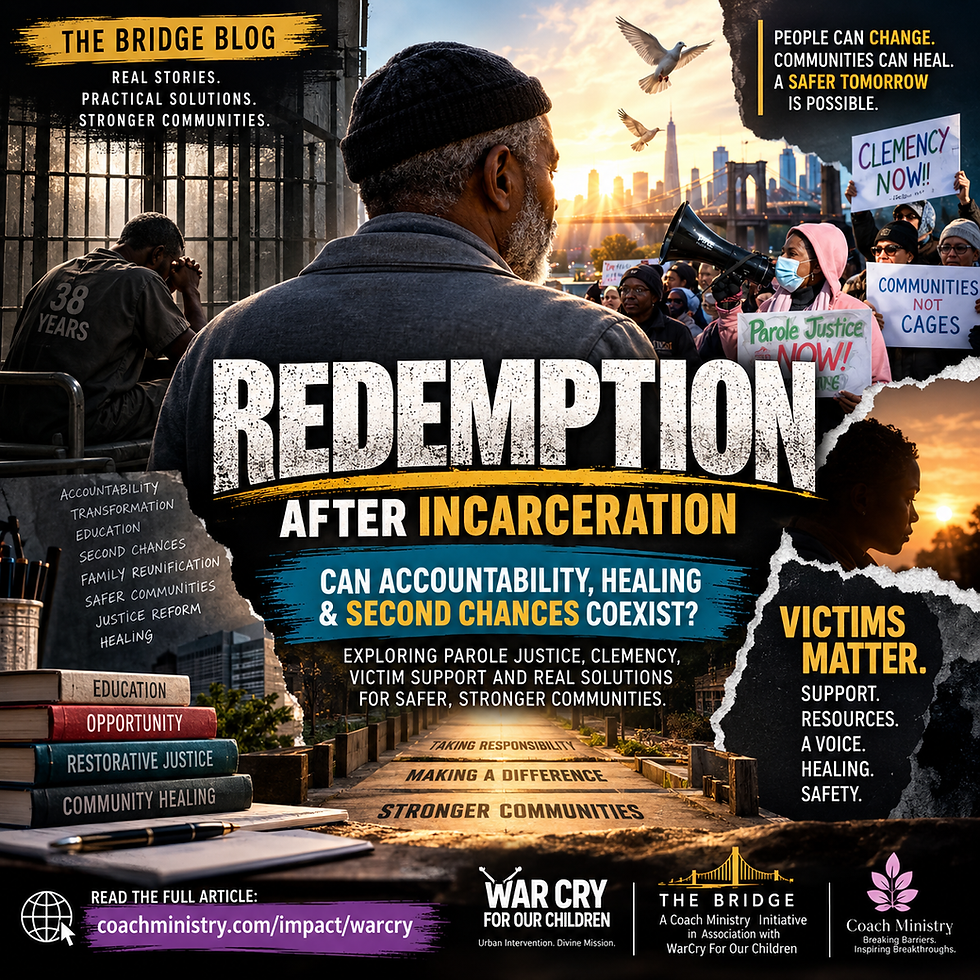
Today’s WarCry For Our Children conversation with Jose Hamza Saldaña, Director of the Release Aging People in Prison Campaign, known as RAPP, brings that question into focus. Saldaña spent 38 years incarcerated in New York State. He was denied parole four times. While inside, he earned a college degree and became involved in restorative and rehabilitative work. After release, he became a national advocate for parole and sentencing reform.
His story does not erase the harm that led to prison. It raises a harder public question: Should a person be judged forever only by the worst thing they have done, even after decades of accountability, change, and service?
This article is informational, not legal advice.
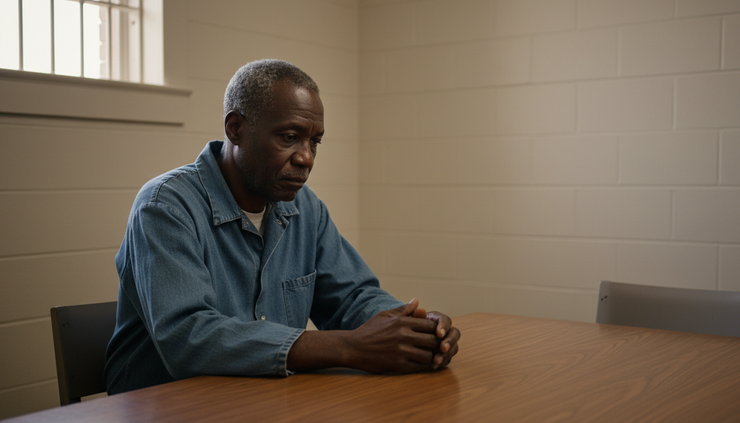
Redemption does not mean the past disappears
Redemption after incarceration cannot mean pretending the crime did not happen. It cannot mean asking victims to move on for the comfort of others. It cannot mean removing consequences.
A stronger definition is this: redemption is responsibility plus change.
That includes:
Telling the truth about the harm caused
Accepting consequences without excuse
Doing the hard work of personal transformation
Making amends where possible
Living in a way that reduces future harm
Being ready for review by people who may still say no
This is the frame behind much of today’s parole reform debate. It is also the frame behind many faith, community, and restorative justice conversations. The Bridge: Redemption is not about replacing accountability with sympathy. It is about asking whether accountability can include evidence of growth.
New York knows this question well. The state has long sentences, aging prison populations, and many people who entered prison as young adults and are now elderly. Some have spent 20, 30, or 40 years behind bars. During that time, people can remain the same. They can also change.
A justice system that refuses to ask that question is not being careful. It is choosing permanence over review.
What Jose Hamza Saldaña’s story puts on the table
Jose Hamza Saldaña’s experience carries weight because it touches several parts of the system at once.
He served 38 years in New York State prison. According to RAPP, he was denied parole four times. While incarcerated, he earned a college degree and took part in rehabilitative and restorative work. After release, he became a leading advocate for people serving long and life sentences, especially older adults in prison.
That path does not answer every public safety question. It does not settle what victims need. It does not prove that every incarcerated person should be released.
It does show that transformation can happen inside prison walls.
Many people in prison enter with trauma, addiction, poor schooling, poverty, violence, and untreated mental health needs. None of those realities excuse harm. They do help explain why rehabilitation matters. If prison only punishes and never changes behavior, the public receives very little beyond containment.
Real rehabilitation can include:
Education and college programs
Substance use treatment
Mental health care
Conflict resolution classes
Restorative justice circles
Parenting programs
Faith-based support
Job training
Mentorship from people who have changed their own lives
For many Black families in New York and across the country, incarceration is not abstract. It affects parents, children, blocks, churches, and neighborhoods. The harm caused by crime is real. The harm caused by mass incarceration is also real. A serious public conversation has to hold both.

Aging in prison changes the public safety debate
Long sentences create a growing population of older incarcerated people. Aging in prison raises moral, medical, and fiscal questions.
Older people in prison often need more medical care. Prisons were not built to function as nursing homes. Staff may end up managing dementia, mobility loss, chronic disease, and end-of-life care. Families often carry the grief from the outside, unable to help in direct ways.
Public safety remains central. A person’s age does not erase the underlying conviction. Some older people can still pose a risk. But age, health, conduct in prison, programming, remorse, release plan, and support network all matter in any honest risk review.
Research in criminal justice has long found that criminal behavior tends to decline with age. That does not mean everyone ages out of risk. It means age should be part of the review.
This is one reason advocates argue for Elder Parole. They say the law should allow older people who have served long periods to appear before the parole board for an individualized hearing. They do not argue that every older person should walk out.
That distinction matters.
Fair and Timely Parole means review, not automatic release
The policy debate around Fair and Timely Parole and Elder Parole is often misunderstood.
Advocates in New York argue that parole decisions should focus on who the person is now, not only who they were at the moment of the crime. They argue that review should include transformation, rehabilitation, readiness for release, disciplinary record, age, reentry plans, and current public safety risk.
The underlying conviction would still remain part of the review. Victim impact would still matter. Prosecutors and law enforcement voices would still be heard under existing processes.
According to public materials from the New York State Senate, these proposals are about parole consideration and standards for review. Parole consideration is not automatic release. A hearing can still end in denial.
The current fight is over what should carry the most weight.
Advocates say parole boards too often deny release based mainly on the seriousness of the original crime, even after decades. They argue that this turns many parole-eligible sentences into death-by-incarceration sentences.
Opponents raise serious concerns. Victims and surviving family members may feel retraumatized by repeated parole hearings. Prosecutors may argue that some crimes deserve permanent confinement. Public safety advocates may worry that risk assessments can fail. Community members may fear that reform will move too fast without enough support after release.
Those concerns should not be mocked or brushed aside. They deserve direct answers.
A stronger parole process should include:
Clear notice to victims and families
Real opportunity for victim input
Full review of prison conduct and programming
Careful risk assessment
A verified housing and support plan
Conditions of supervision
Transparent reasons for approval or denial
Access to reentry services before and after release
If reform means faster decisions with weaker review, it will lose public trust. If reform means serious review with real standards, it can improve both fairness and safety.
Victims must remain part of the story
No conversation about redemption is complete if it treats victims as an obstacle.
Victims and surviving families carry grief, fear, anger, medical costs, lost income, trauma, and unanswered questions. Some live with permanent injuries. Some lost a child, parent, sibling, partner, or friend. Some feel the system used their pain during sentencing and then forgot them.
Their needs are not symbolic. They are practical and ongoing.
Victims may need:
Safety planning
Counseling and trauma care
Clear information about court and parole processes
Notification before hearings or release
Help with medical bills or funeral costs
Emergency shelter in some cases
Legal assistance
Restitution where applicable
A voice in the process
Respect, whether they forgive or never forgive
Redemption for an incarcerated person must never require a victim to forgive. It must never require a victim to reconcile, meet with the person who harmed them, take part in restorative justice, or minimize what happened.
Restorative justice can help some people. It gives victims a chance to ask questions, name the harm, and be heard. It can require the person who caused harm to face the human impact of their actions. But it must be voluntary. No victim should be pressured into healing on someone else’s timeline.
New York does have victim support infrastructure. The New York State Office of Victim Services supports more than 200 victim-assistance programs. These programs can provide counseling, advocacy, emergency shelter, legal help, and other services. Eligible victims may also receive compensation for crime-related expenses.
That support should be easy to find, culturally responsive, and available long after the headlines fade.

Accountability must be more than time served
A person can serve decades and still avoid responsibility. Time alone does not prove change.
Real accountability asks harder questions.
Has the person told the truth about what happened? Have they stopped blaming everyone else? Have they shown remorse through conduct, not performance? Have they changed how they respond to conflict? Have they helped others avoid harm? Have they built a realistic plan for life outside?
Parole boards and clemency officials should not rely on speeches alone. They should look at a full record over time.
That record may include:
Disciplinary history
Program completion
Educational achievement
Work assignments
Mental health and substance use treatment
Letters from staff, mentors, family, and community groups
Victim statements
Release housing
Employment or volunteer plans
Medical needs
Supervision conditions
Executive clemency also belongs in this conversation. Governors have the power to commute sentences or grant other forms of mercy. Clemency is not the same as parole. It is a separate executive power, often used in rare cases where continued incarceration no longer serves justice.
Clemency decisions also require care. They should not be based on political pressure alone. They should consider harm, accountability, transformation, age, health, family ties, and public safety.
Reentry is where second chances become real
Release is not the end of accountability. It is the start of a new test.
People coming home after decades face a world that has changed. Phones, transit systems, housing markets, job applications, health care, and family roles can feel unfamiliar. Some return with no savings. Some return to neighborhoods hit hard by poverty, violence, grief, and displacement.
Family reunification can be healing. It can also be complicated. Children may now be adults. Partners may have moved on. Parents may have died. Trust may need to be rebuilt slowly.
Strong reentry planning protects both the person coming home and the public. It should include:
Stable housing
Health care and medication access
Identification documents
Food support
Job training or income support
Mentorship
Family counseling
Substance use treatment when needed
Clear parole conditions
Community-based conflict support
This is where community organizations, ministries, credible messengers, and local advocates matter. They can help turn release from a paperwork event into a stable return.
The Bridge uses the shorthand Redemption RAPP The Bridge War Cry for this conversation because it sits at the meeting point of lived experience, policy, faith, family, and public safety.
Public safety requires honesty on both sides
Reform advocates need to say clearly that release can carry risk. No system can promise perfection. A person who has changed can still fail. Supervision can miss warning signs. Services can be underfunded.
Opponents of reform also need to face hard facts. Keeping every person with a serious conviction in prison until death does not heal every victim. It does not bring back the dead. It does not invest in trauma care. It does not prevent all future violence. It also spends public money incarcerating elderly people who may pose little risk after decades of demonstrated change.
The real public safety question is not whether a person once caused serious harm. In these cases, they did. The question is whether continued incarceration is still necessary after a serious review.
That question should be answered case by case.
A just system can deny release when risk remains high. It can also grant release when the evidence shows transformation, readiness, and a safe plan.
Both decisions can take harm seriously.
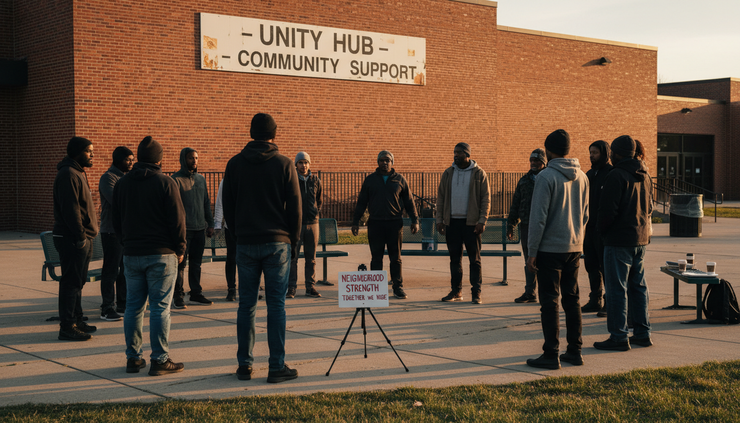
The question justice cannot avoid
The Bridge exists for real stories, practical solutions, and stronger communities. This Coach Ministry initiative, in association with WarCry For Our Children, Urban Intervention, and Divine Mission, is built for conversations that do not fit easy slogans.
Redemption after incarceration is one of those conversations.
Victims must be supported fully. Their pain must not be used and then ignored. Their safety, dignity, counseling, compensation, information, and voice must be treated as central.
People who caused harm must be held responsible. No apology should erase consequences. No program certificate should outweigh the truth of what happened.
But a justice system also has to decide what it believes about human beings. If a person accepts responsibility, changes over decades, ages in prison, prepares for release, and no longer poses the same risk, should the law allow a serious review?
That is the deeper question.
Can a justice system take harm seriously, support victims fully, demand accountability, and still leave room for transformation?
If redemption means the disappearance of consequences, it is too cheap. If redemption means responsibility plus change, then justice must be strong enough to examine it.


Comments